
Let me tell you about a French agricultural engineer named Max Ringelmann.
In the late 1800s, Ringelmann ran a simple experiment. He asked people to pull a rope, first alone, then in groups of increasing size. He measured how hard each person pulled. The results were, to put it politely, not what anyone expected.
When two people pulled together, instead of producing double the force, they produced 186% of what one person could do alone. Not 200%. 186%. Add more people and it got worse. The bigger the group, the less effort each individual put in. Not because they were lazy people. Because the group structure itself was making their individual effort invisible. If nobody could see exactly how hard you were pulling, why pull as hard as you could?
Ringelmann called it social loafing. A hundred years later, it has a formal name: the Ringelmann Effect. And I’m telling you, after twenty years of building and running teams, it is one of the most quietly expensive things happening inside businesses right now. Including, at various points, mine.
Here’s how it shows up in practice. You add people to a project because progress feels slow. Progress gets slower. You assume the team needs more support so you add more people. Progress gets even slower. Everyone seems busy. Nobody seems responsible. Somehow the thing that should have been done last Tuesday still isn’t done. Sound familiar?

What’s actually happening is simple. The more people share a task, the more diffuse the accountability becomes. When ten people own something, nobody owns it. Everyone is pulling the rope. Nobody is pulling hard. And crucially, nobody feels like it’s their fault when the thing doesn’t move.
I’ve sat in too many meetings where a problem gets discussed, actions get assigned to a group, and three weeks later that problem is somehow worse. The issue was never the quality of the people in the room. The issue was that we had pointed at a group instead of pointing at a person. Groups discuss. Individuals decide. Groups review. Individuals act. The moment you assign something to “the team,” you have essentially assigned it to no one.

This is not a criticism of teamwork. Collaboration is real and valuable. But there is a difference between people working together toward a shared goal where each person’s contribution is clear, and people being lumped into a group where individual effort disappears into collective noise. The first is a team. The second is a rope-pulling experiment waiting to confirm Ringelmann’s findings all over again.
The fix, as far as I’ve found one, is almost embarrassingly simple: every outcome needs a single owner. Not a team lead who manages a group. One specific person whose name is attached to the result. Not “the marketing team is handling it.” Who specifically? Not “operations will sort that out.” Which person in operations, by when, measured how?
This is not about blame. It’s about clarity. When someone knows that an outcome is theirs, their relationship with it changes. They stop waiting for someone else to notice the problem. They stop assuming someone else has it covered. They pull harder, because they know they’re the one holding the rope.
At Ergode, managing hundreds of people across two countries, the moments where things stalled were almost always traceable to a single failure: ownership had been given to a group. The moments where things moved faster than expected were almost always traceable to the opposite: one person, clearly accountable, with no ambiguity about whether it was their job.
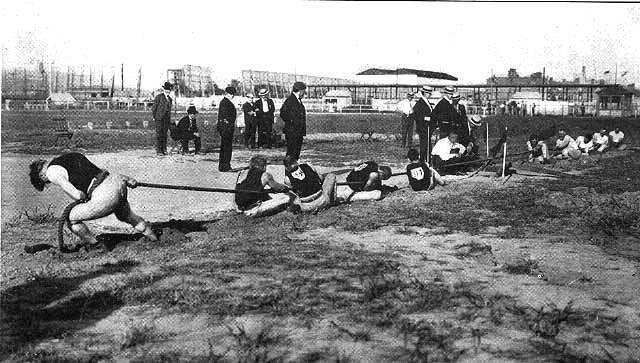
Max Ringelmann figured this out with a rope in the 1800s.
Some of us are still learning it.
Regards,
Rupesh


Leave a Reply