
Every few weeks, someone asks me the same question, usually with a slightly nervous smile. “If AI can do all this, why would you still hire anyone?”
It is a fair question, and I understand why people ask it. But I think it starts from the wrong picture. The companies that grow fastest over the next decade will not be the ones that hire the fewest people. They will be the ones that give the people they hire the most worth doing.
Here is why I believe that, and what it means for how a global eCommerce company should think about hiring.
What AI Makes Cheap
AI makes output cheap. First drafts, product descriptions, translations, data summaries, routine replies: work that used to fill an afternoon now takes minutes. I welcome that, and so should anyone running a business.
But cheaper output does not mean less to do. When something gets cheaper, businesses usually want more of it. More markets, more products, more channels, and more customers to look after.
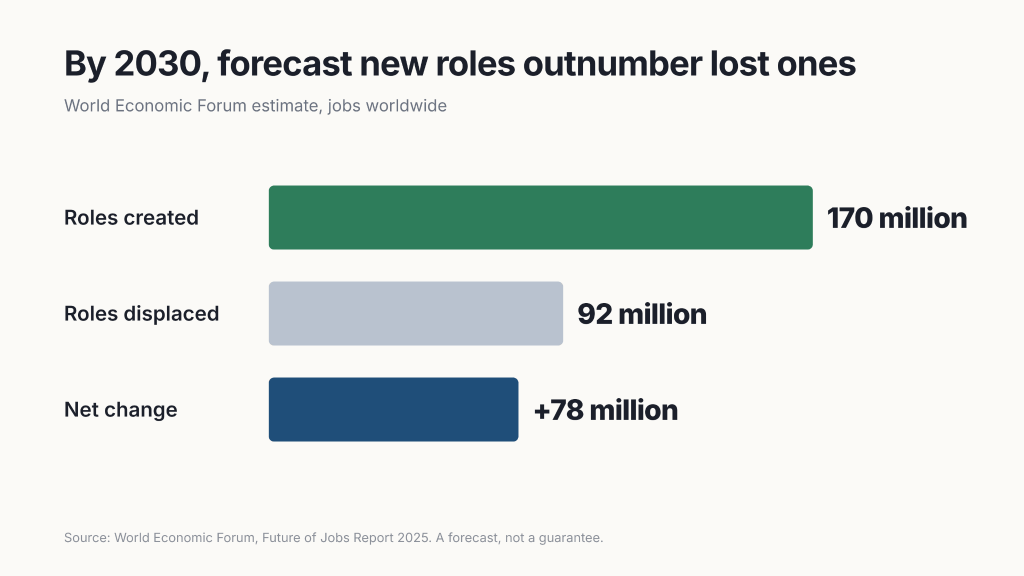
The World Economic Forum’s Future of Jobs Report 2025 expects 170 million new roles to be created worldwide by 2030 and 92 million to be displaced, a net gain of 78 million. It also expects nearly 40% of the skills used on the job to change. These are forecasts, and the same report finds that 41% of employers expect to reduce headcount where AI automates tasks. So this is not a free ride. But the picture is closer to “different jobs, and more of them” than “no jobs”.

What Gets More Valuable
When output is cheap, the scarce things move somewhere else. I see four of them.
Judgment. AI can give you ten good options in seconds. Someone still has to decide which one fits your customers, your margins and your risk appetite.
Accountability. A tool can draft the answer. It cannot own the result. When something goes wrong, customers and partners want a person who picks up the phone and fixes it.
Relationships. People buy from, and stay with, businesses they trust. That trust is built through the way problems are handled, not the way messages are generated.
Exceptions. Global eCommerce is full of them. A parcel held at customs, a carrier that misses a handover, a duty rule that changes in one country overnight. Rules and models handle the standard case well. The exceptions are where good people earn their keep.
What This Looks Like at Ergode
We use several AI tools across the business, and we add to them regularly. Each one takes a piece of routine work off someone’s desk.
The result is not a smaller job. It is a different one. The standard cases get handled faster, so the questions that reach our people are the harder ones: a seller entering a new country, a customer whose situation does not fit the template, a rule change that needs a quick, sensible response. Those are the questions I want experienced, curious people working on.
Here is one example. When a role attracts a large number of applicants, the first round of interviews is the hardest part to do well. So we built a tool for it, entirely with AI. It evaluates the first-round interviews, scores and ranks candidates on multiple factors, and gives us a filtered shortlist. Our talent acquisition team takes that shortlist forward into the later rounds.
The tool does not hire anyone. It does the sorting, so our people can spend their time on the part that needs a person: the later conversations, where judgment and fit matter most.
What Leaders Should Do Now
If you run a team or a company, three things matter more than any tool choice.
- Hire for curiosity and ownership. Tools change every few months. People who learn quickly and take responsibility for outcomes adapt to each new one.
- Redesign the role, not just the workflow. When AI takes a task, decide what the person does next and say so. Otherwise people only see what was taken away.
- Invest in skills early. With nearly 40% of job skills expected to change by 2030, training is part of the hiring plan, not an afterthought.
The Case for Being Optimistic
I am not saying every role stays the same. It will not, and pretending otherwise would not help anyone. But I would rather lead a company that is asking “what can our people do now that they could not before?” than one asking “how few people can we manage with?”
The first question grows a business. The second only shrinks one. AI gives us the chance to build teams that handle more markets, more customers and more complexity than we could before, and that still needs people.
So yes, we will keep hiring. We will just be asking more of the work, and giving our people more reason to do it.
Agree or disagree? Tell me where you land on LinkedIn. And if you run a team, tell me what you are hiring for now.
Regards,
Rupesh
Discover more from Cloverbites By Rupesh Sanghavi
Subscribe to get the latest posts sent to your email.

Leave a Reply