
Founders love their gut. We talk about it like it is a superpower. A sixth sense that no spreadsheet can replicate. And for a while, in the early days, it genuinely is. Then the business grows. And the gut starts writing cheques the business cannot cash.
I want to be clear about something before we go further. I am not here to tell you that data beats instinct every time. That is not true and anyone who says it has probably never had to make a decision at midnight with incomplete information and a board call at nine the next morning.
What I am saying is this. There comes a point in every founder’s journey where the gut stops being a compass and starts being a bias. And the tricky part is that it feels exactly the same from the inside.
The hire that the data flagged and the gut ignored.
Here is a situation most founders will recognise. You are hiring for a senior role. The process throws up two candidates. Candidate A ticks every box. Strong track record, structured thinker, references that border on embarrassingly good. Candidate B has a patchier CV, one reference that makes you slightly nervous, and a structured assessment score that is just okay. But they are brilliant in the room. Energetic. Confident. They remind you a little of yourself at that stage, which, if you are being honest, is doing a lot of work in this decision.
You hire Candidate B. Because your gut said so. Because the energy was right. Because you have been doing this long enough to trust yourself.
Three months later you are having the kind of performance conversations you were hoping to avoid. Six months later you are starting the process again. And somewhere in the back of your head, Candidate A has moved on to a competitor and is quietly doing very well.
This is not a made-up story. Some version of this has happened in almost every business I have seen scale past a certain size. Including, if I am being honest, my own.
The gut is not always wrong. But it is almost always louder than it deserves to be. And the bigger your business gets, the more expensive that noise becomes.

What the gut is actually doing when you think it is deciding.
Here is the thing nobody tells you about founder instinct. A lot of the time it is not really instinct at all. It is pattern recognition built on a sample size of one. Your own experience. Your own history. Your own blind spots dressed up as wisdom.
When a founder says “I have a good feeling about this person,” what they often mean is “this person reminds me of someone who worked out before.” Or “they speak the same way I do.” Or “they pushed back in the interview and I respect that” even though pushing back in an interview and delivering results in a role are two completely different skills.
The gut is not reading the room. It is reading itself. And the bigger and more complex your business becomes, the less reliable that reading actually is.
I have watched founders greenlight entire market expansions because a visit felt right. Pull out of deals because something seemed off in the room. Double down on products that the numbers were quietly begging them to reconsider, because they believed in it. Sometimes they were right. More often, they were just certain, which is a very different thing.
The shift that actually changes things.
It is not about replacing your instinct with a dashboard. Nobody wants to run a business entirely by committee and spreadsheet. That is its own kind of disaster, just a slower and more bureaucratic one.
The shift is simpler than that. It is learning to ask one question before you make any significant call: what does the gut want to do, and what does the evidence say? Not to automatically follow the evidence. But to at least have an honest conversation between the two before you decide.
In our business, some of the best decisions came from moments where the data pointed one way, the gut pushed back, and the honest tension between those two things led to a better answer than either would have produced alone. A new market that looked marginal on paper but had signals the numbers were not capturing yet. A product decision where the data said yes but something felt structurally wrong, and turned out to be.
The gut has a role. It is just not the role most founders give it, which is essentially running the whole show unchecked until something expensive goes wrong.
The best founders I know do not choose between instinct and evidence. They have learned to make them talk to each other. And they are genuinely curious about what happens when the two disagree.
Your gut was built for a smaller business.
This is the part worth sitting with. The instincts you built in the early years were calibrated to a specific environment. Small team. Fast decisions. Limited data. High uncertainty. In that environment, the gut was doing a lot of heavy lifting and doing it well.
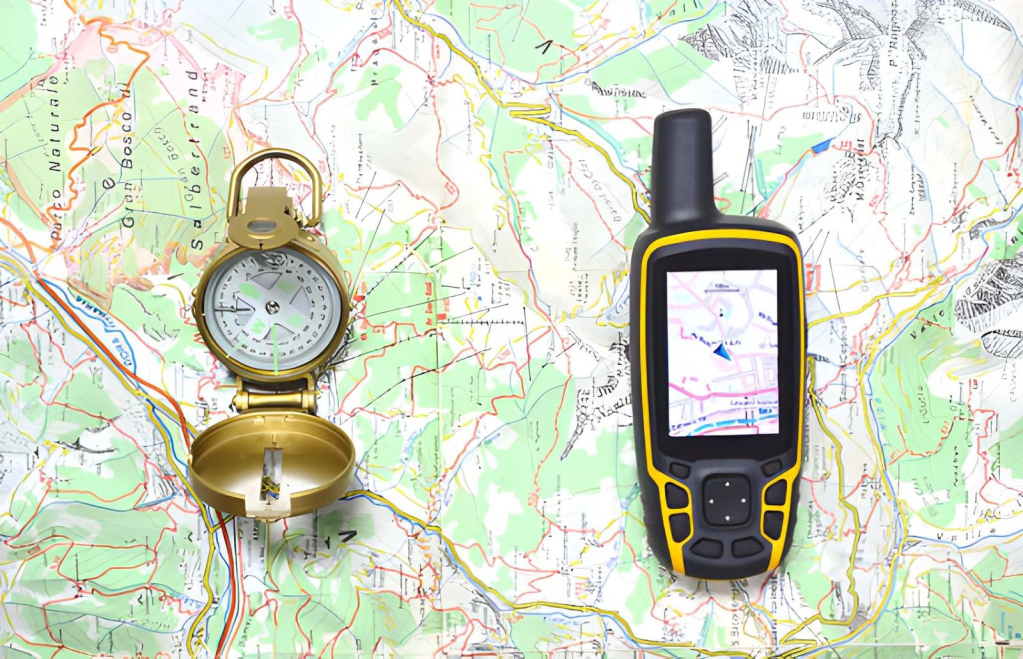
But a business at scale is a different animal entirely. The decisions are bigger, the consequences last longer, and the complexity is orders of magnitude higher than anything your early instincts were trained on. Trusting the same gut that helped you survive year two to make a twenty million dollar call in year ten is a little like using the map from your first road trip to navigate a different continent.
It is not that the gut is wrong. It is just working with old information. And updating it, regularly and honestly, is part of what growing as a founder actually means.
The day I started treating my instincts as a starting point rather than a conclusion, things got noticeably better. Decisions got sharper. Mistakes got smaller. And the business, freed from a few of my more confident blind spots, got faster.
Turns out, the gut does its best work when it knows it is not the only one in the room.
Regards,
Rupesh
 Cloverbites By Rupesh Sanghavi
Leave a Reply