
I’ve been in business for over 25 years. Started as a chemical engineer, then ended up building an e-commerce company from literally reselling one used book. You’d think after all that, this guy must’ve had this figured out.
Turns out, the longer you’re in the game, the easier it is to forget you’re still playing.
A few months ago, my CTO asked me a question about our cloud infrastructure. I jumped in with an answer—confident, detailed, very CEO-like. Halfway through my explanation, I noticed he was doing that polite nod thing people do when they’re too nice to tell you you’re wrong.
“Rupesh,” he said gently, “that’s how we did it in 2019. The tech’s completely different now.”
I felt like someone had just told me my favorite restaurant closed three years ago, and I’d been recommending it to everyone.
When Your Experience Becomes Your Blind Spot
Here’s the thing nobody tells you about being in business for decades: you accumulate so much pattern recognition that you stop seeing what’s actually in front of you. You see what used to be there.
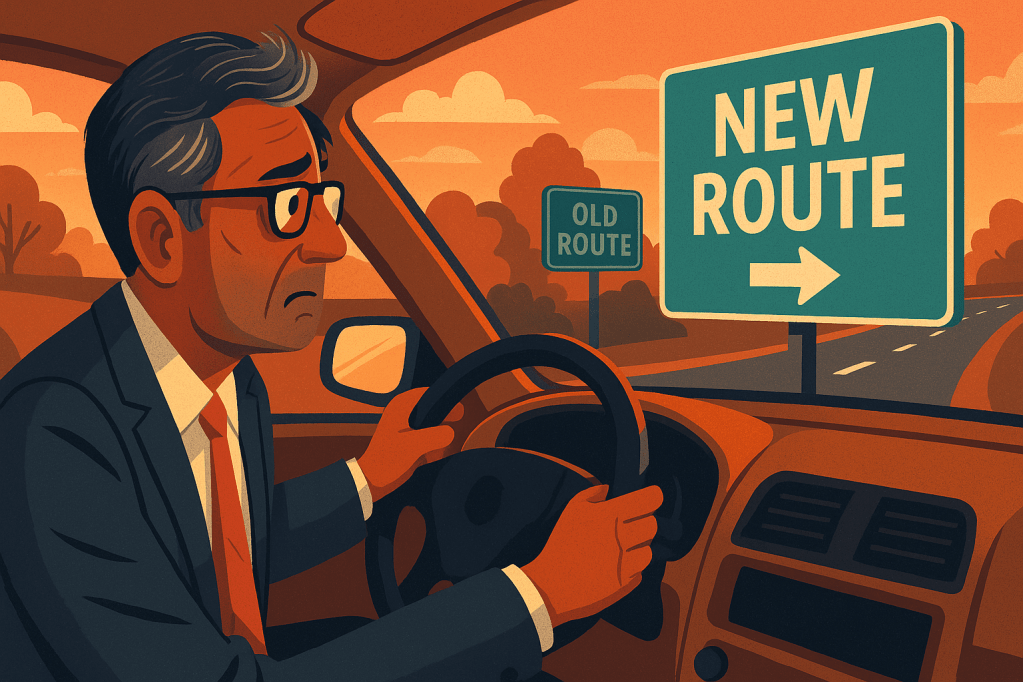
It’s like driving the same route to work for 20 years and then one day realizing they built a highway three years ago that cuts your commute in half. Everyone’s been using it. You just kept taking the old road because it worked fine in 2015.
I started my company by selling a single used book online. No business plan. No investors. Just curiosity and a willingness to figure things out as I went. Back then, I had to be a learner because I didn’t know anything about e-commerce. I was a chemical engineer trying to understand Amazon’s algorithm like it was a distillation column.
But somewhere along the way—maybe around employee 50, maybe after a few good years—I switched from “I’m figuring this out” to “I’ve figured this out.” And that shift? That’s when you start dying and just don’t know it yet.
The Meeting That Humbled Me
We were reviewing a product strategy and I was explaining—with the confidence of someone who’s seen every trick—why we should approach it a certain way.
A junior product manager, maybe eight months into the job, raised her hand. “That makes sense for how customers behaved three years ago. But have you looked at the data from last quarter? The patterns completely flipped.”
She pulled up the numbers. She was right. I’d been operating on instincts formed in 2021. It was now 2025, soon to be 2026. The world had moved, and I was still advising the old neighborhood.
See, as per me, expertise is a depreciating asset. The half-life of what you “know” is getting shorter every year. What worked six months ago might be useless now. 94% of employees say they’d stay longer at companies that invest in learning, but see, leaders need that same investment. We just forget because we’re supposed to be the ones with the answers.

The Shift That Saved Me
I made a decision: I’d rather be the dumbest person in the room who’s learning than the smartest person who stopped.
Now in meetings, instead of jumping in with solutions, I ask more questions. Instead of defending my old playbooks, I ask, “What’s changed since we last did this?” Instead of pretending I understand TikTok ads, I literally ask our 24-year-old marketing coordinator to explain them to me like I’m ancient.
The difference was immediate. Decisions got faster because we weren’t filtering everything through my outdated frameworks. The team got stronger because they stopped waiting for me to validate their ideas. And I got better because admitting you don’t know something is the fastest way to learn it.
Now, I block one hour every Saturday just for learning. Not emails. Not “strategy time.” Actual learning. Some weeks, I take a course on something I know nothing about. Other weeks, I watch talks from people way smarter than me. Sometimes I learn things that change how we run the company. Other times, I just confirm I’m more clueless than I thought. Both are valuable.

The Real Lesson After 25 Years
The curse of experience is real: the more you know, the harder it becomes to remember what it’s like not to know. You skip steps. You assume connections. You give advice based on a world that doesn’t exist anymore.
Great leaders fight that curse. They stay curious. They admit when they’re wrong. They change their minds in public. They model continuous learning, not authority.
This week, find one decision you make on autopilot. Ask someone newer or younger: “If you were starting fresh, how would you do this?” Then actually listen. Don’t defend. Just listen.
Rupesh
 Cloverbites By Rupesh Sanghavi
Leave a Reply