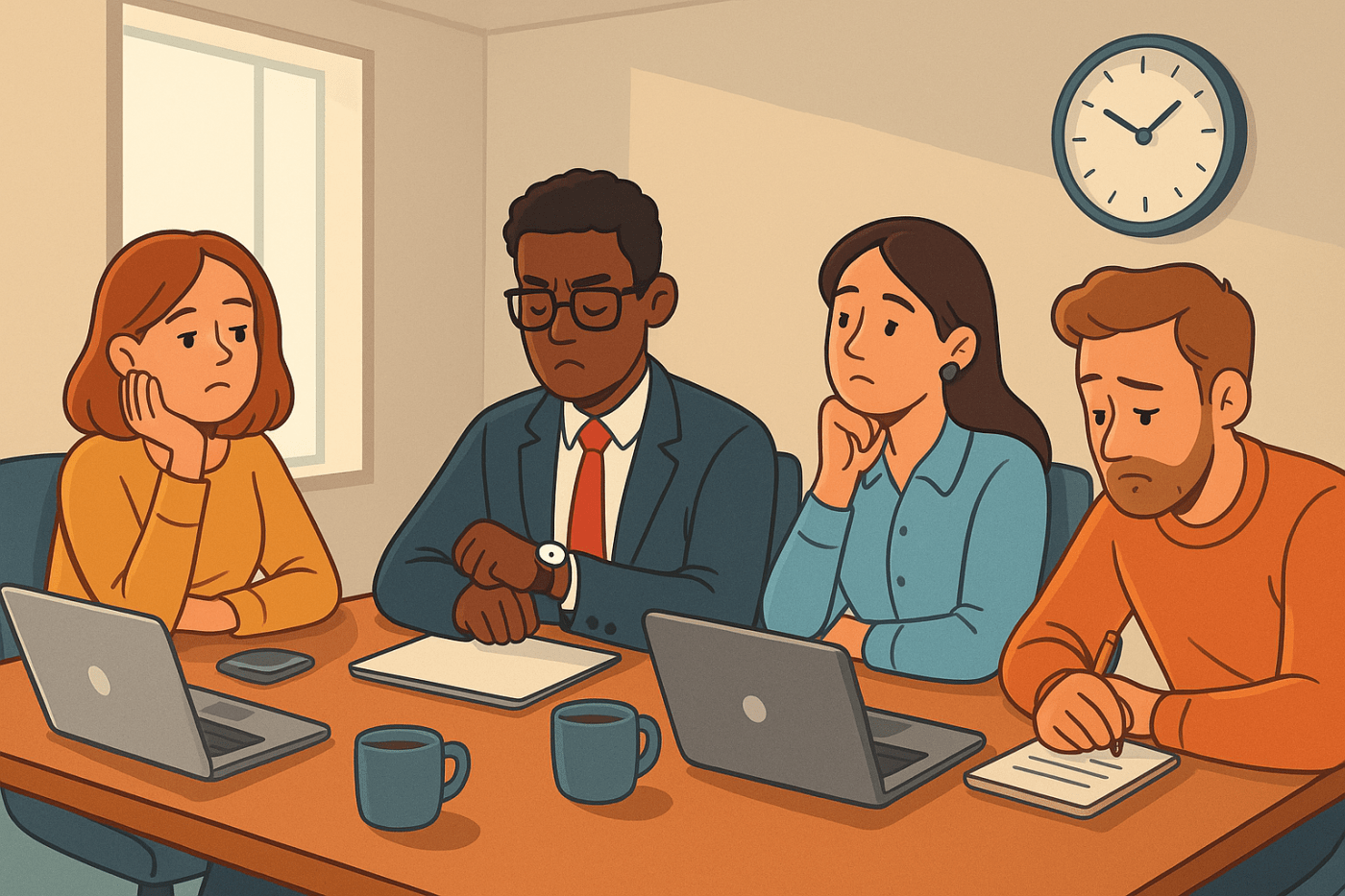
Some meetings are like a Netflix series. You join thinking you will watch one quick episode. Three hours later, you are deep into season two, wondering where the time went.
I used to think meetings were a sign of progress. Something came up? Meeting. Someone had an idea? Meeting. Someone just wanted to “catch up”? Meeting. It felt productive until you realise you have taken a part-time job in attending meetings, and your actual job is now your side hustle. Wow!

The true cost of long meetings
Meetings feel free because they are not a line item in the budget. But they cost more than you think. Ten people in a one-hour meeting is not one hour lost, it is ten hours gone. That is an entire workday for one person, spent in a room debating whether to use bullet points or dashes.
Even worse, long meetings send a subtle message that your time is not that important. When people start multitasking in a meeting, it is not always because they are distracted. Sometimes they are just trying to rescue what is left of their day.

Shorter does not mean less important
Some of the best problem-solving sessions I have been part of lasted less than fifteen minutes. People came in ready, the agenda was clear, and everyone left with action items. No, “we will circle back on this next week.” No “let’s put a pin in it.” Just decisions made and work moving forward.
The magic formula is simple. Clarity before the meeting. Focus during the meeting. Speed after the meeting. If you get those right, you do not need a full hour; you barely need to finish your coffee.

At Ergode, we had to break up with bad meetings
We started with a simple rule: no meeting without a clear purpose in the invite. If the purpose is vague, it is declined or reworked. We also began experimenting with 15-minute and 25-minute meetings instead of the default 30 or 60 minutes. The result was more focus, less filler, and far fewer glazed expressions.
And here is the best part: shorter meetings made people sharper. When you know you have 15 minutes, you get to the point. No one brings 12-slide decks for what should be a two-slide conversation.
We also questioned recurring meetings. Just because something has been on the calendar since 2018 does not mean it deserves to survive another Tuesday.
The takeaway
Meetings are not the enemy. Bad meetings are. Respect the clock. Respect people’s attention spans. And never mistake talking for progress.
If you can solve something in ten minutes, you have just given your team back a little breathing room and maybe even the chance to enjoy their coffee while it is still hot.Regards,
Rupesh
 Cloverbites By Rupesh Sanghavi
Leave a Reply