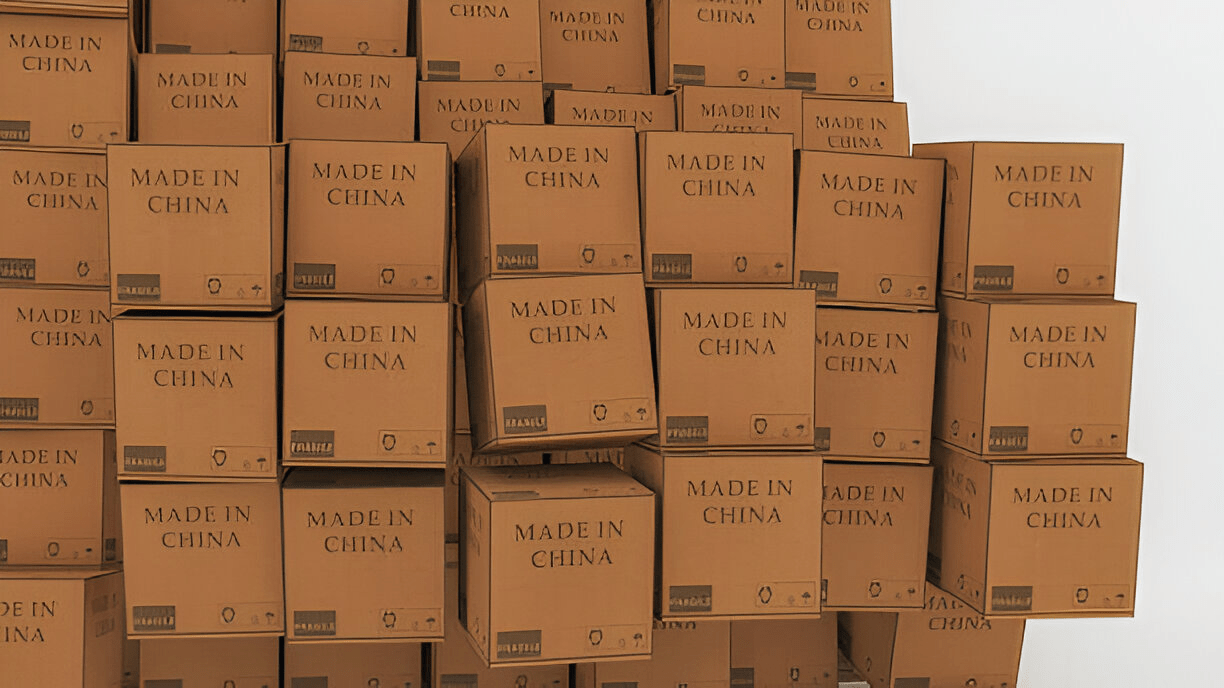
A few months ago, I was in China, visiting manufacturers and suppliers—something I’ve done many times over the years. Walking through vast factory floors, watching intricate supply chains in motion, and speaking with business owners, one thing became clear: China still dominates global manufacturing.
But this time, the conversation was different.
Instead of just discussing scalability and efficiency, there was a recurring theme: change. Rising costs, shifting trade policies, and new sourcing trends are making businesses rethink their heavy reliance on China.
So, the question is no longer whether China is the best place to manufacture—it’s whether e-commerce brands can afford to depend on one country alone.

Why Brands Are Re-Evaluating the ‘China-First’ Model
For decades, brands followed a “China-first” strategy—it was the fastest, cheapest, and most efficient way to scale. But global shifts are now making companies pause and reconsider:
🔹 Trade Uncertainty & Tariffs – Since 2018, the U.S. has imposed over $350 billion in tariffs on Chinese imports, making costs unpredictable. Businesses are now factoring in geopolitical risks when deciding where to manufacture.
🔹 Rising Labor Costs – The ultra-low wages that once made China the world’s factory are no longer the same. Manufacturing wages have increased by over 60% in the past decade, reducing China’s price advantage.
🔹 Supply Chain Vulnerabilities – COVID-19 was a wake-up call. Factory shutdowns, shipping delays, and raw material shortages exposed the risks of over-reliance on a single country. Many brands were left scrambling for alternatives.
🔹 Regulatory & Consumer Pressure – The Uyghur Forced Labor Prevention Act (UFLPA) and similar laws are making compliance more complex. Consumers are also demanding greater transparency about where and how their products are made.
As a result, brands aren’t necessarily leaving China—but they are diversifying.

‘China Plus One’: The Rise of Alternative Sourcing
During my visit, I also noticed a trend: even Chinese manufacturers are expanding into Vietnam, India, and Mexico—a clear sign that businesses are hedging their bets.
Many brands are now following a “China Plus One” strategy—keeping China as a key supplier but spreading production to:
✅ Southeast Asia (Vietnam, India, Thailand, Indonesia) – Lower labor costs and government incentives are driving Vietnam’s U.S. exports up 40% since 2018.
✅ Nearshoring (Mexico, Eastern Europe) – Moving production closer to key markets cuts shipping costs and lead times. Mexico, under the USMCA trade agreement, has seen a 25% rise in U.S. manufacturing investment.
✅ Reshoring (USA, EU, UK) – Automation and robotics are making local production viable for select industries, especially in high-tech and premium product categories.
This shift isn’t just about finding a cheaper option—it’s about building supply chain resilience.
Should E-Commerce Brands Make the Move?
The idea of shifting production sounds great on paper, but it comes with real challenges. Moving manufacturing isn’t as simple as flipping a switch—it requires strategic thinking.
🔹 Cost vs. Value – Do the savings in tariffs and logistics justify the investment in building new supplier relationships?
🔹 Supplier Reliability – Can alternative regions match China’s speed, efficiency, and quality standards? Many manufacturers still lack the scale and expertise China has built over decades.
🔹 Scalability – Does the new location have the infrastructure, skilled labor, and logistics to support long-term growth?
For some brands, China is still the best option. For others, diversifying sourcing reduces risk and improves long-term sustainability.

What’s Next? A Smarter, More Balanced Sourcing Model
E-commerce brands that stay agile will be the ones that thrive. The smartest companies aren’t leaving China overnight—they’re taking a more strategic, multi-country approach:
✔ Keeping China as a core supplier while building backup production hubs in Southeast Asia or Mexico.
✔ Exploring automation and nearshoring for categories that require faster turnaround times.
✔ Prioritizing supplier relationships to ensure quality and long-term stability.
At Ergode, we’re always analyzing how global sourcing shifts impact brand growth. The companies that succeed in the next decade won’t just be the cheapest or fastest—they’ll be the most adaptable.
So, what do you think? Is it time to rethink ‘Made in China,’ or is it still the best strategy? Drop your thoughts in the comments or let’s continue the conversation on LinkedIn.
— Rupesh
 Cloverbites By Rupesh Sanghavi
Leave a Reply