One evening, I was watching a game of Cricket at home when I suddenly had a craving for ice cream. Instead of stepping out, I did what most of us do these days—I grabbed my phone, tapped a few buttons, and ordered it.
Ten minutes later, the doorbell rang. The delivery rider handed me the ice cream, barely stopping before speeding off to his next drop. The whole transaction had taken less time than a halftime break.
It was impressive.
Behind this instant convenience was an intricate network—warehouses operating at full speed, riders racing against time, and an invisible environmental and logistical cost stacking up with every rapid delivery.
It made me think: Are we moving toward a more efficient world, or are we just accelerating at any cost?

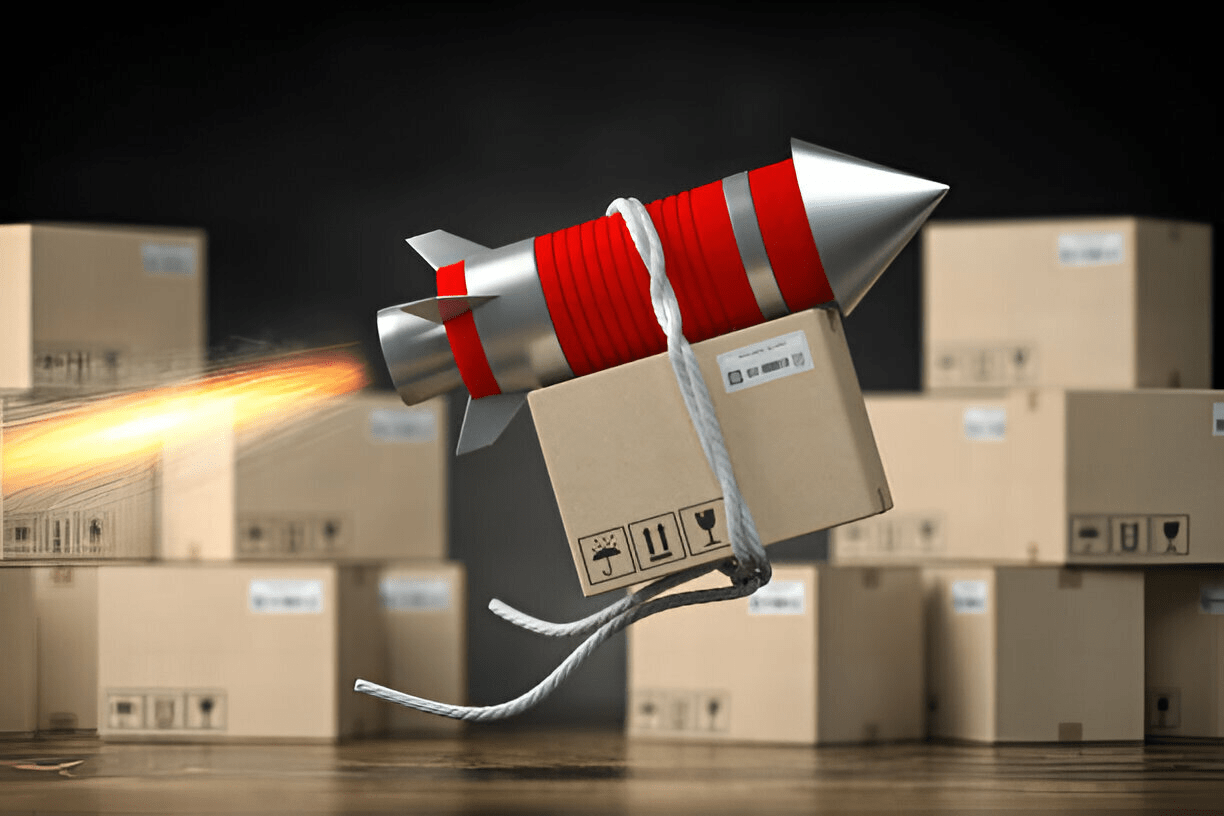
The 10-Minute Delivery Boom: A $150 Billion Market
Speed has always been a selling point in e-commerce. But in the last few years, the race has intensified.
Companies like Zepto (India), Blinkit (India), Getir (Turkey), and Gorillas (Germany) have reshaped consumer expectations, promising 10-minute deliveries on groceries, essentials, and even electronics.
And the numbers speak for themselves:
- The quick commerce market is expected to hit $150 billion by 2027, up from $30 billion in 2021 (RedSeer Report).
- India’s Zepto completed more than 1 million orders a day within two years of launch.
- In China, Meituan and JD.com process over 100 million instant deliveries per month.
- Over 50% of Gen Z consumers say speed influences where they shop (McKinsey).
But while the demand is clear, the execution is far more complex.

The Hidden Cost of Instant Gratification
For every ice cream that arrives in 10 minutes, there’s a trade-off happening somewhere.
1️⃣ The Human Cost
- Rider speeds increased by 30% after 10-minute delivery models launched, leading to a 40% rise in road accidents among delivery workers (Indian Federation of App-Based Transport Workers, 2023).
- A study in Europe found that 73% of quick commerce riders felt unsafe on the job due to time pressure (EU Gig Economy Report, 2022).
- Delivery workers in some regions make as little as $0.50 per trip, forcing them to rush to complete more orders.
2️⃣ The Environmental Cost
- 10-minute delivery models generate 30% more CO₂ emissions than standard e-commerce (MIT Sustainable Logistics Study, 2022).
- In urban areas, rapid deliveries add an extra 5 million delivery trips per day, increasing congestion (World Economic Forum).
- Warehouses must operate at full capacity 24/7, consuming up to 40% more energy than traditional fulfillment centers.
3️⃣ The Business Cost
- Even giants like Amazon and Walmart struggle to make ultra-fast delivery profitable.
- 15-minute delivery services lose an average of $3–$5 per order, making it an unsustainable long-term model (Financial Times, 2023).
- Several startups in the space have already collapsed, including Buyk, Jokr, and Fridge No More, due to excessive operating costs.
This raises an important question: Are ultra-fast deliveries truly solving a problem, or are they just creating a new one?
Should We Slow Down or Rethink Speed?
Speed isn’t inherently bad. Convenience isn’t inherently unsustainable. But we need to balance them with long-term responsibility.
Some companies are already rethinking their approach:
- Amazon’s “Amazon Day” delivery option lets customers group orders into fewer, more efficient shipments, reducing carbon footprints by up to 30% per package.
- Starbucks and Walmart are experimenting with slower, more sustainable delivery options, incentivizing eco-conscious consumers with discounts.
- Regulators in Europe are pushing for gig worker protections, ensuring fairer working conditions in the race for speed.
The Future of Fast Delivery: Smart, Not Just Fast
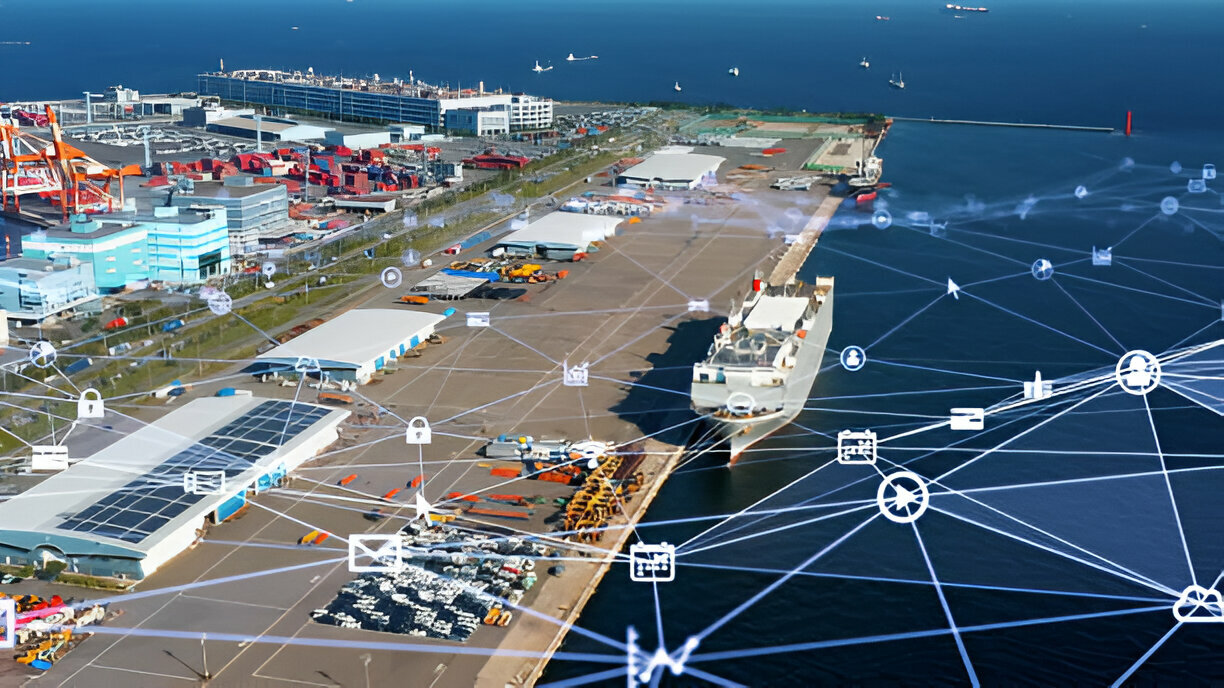
Imagine an ecosystem where speed is measured not just in minutes, but in efficiency, sustainability, and fairness.
- AI-powered logistics optimizing routes to reduce unnecessary trips.
- Predictive demand models reduce waste and unnecessary storage.
- Hybrid delivery models blending fast and slow options to cater to both urgency and sustainability.
The future isn’t about eliminating fast delivery—it’s about making it smarter and more responsible.
So, What Comes Next?
The next time you’re about to order something in 10 minutes, ask yourself—do I really need it now?
For businesses, the real challenge isn’t just keeping up with the speed race. It’s about answering a deeper question:
“Are we building a system that prioritizes convenience at any cost, or are we shaping an e-commerce model that is fast, fair, and future-proof?”
Because in the end, sustainable convenience is the only kind that lasts, isn’t it?
Regards,
Rupesh
 Cloverbites By Rupesh Sanghavi
Leave a Reply